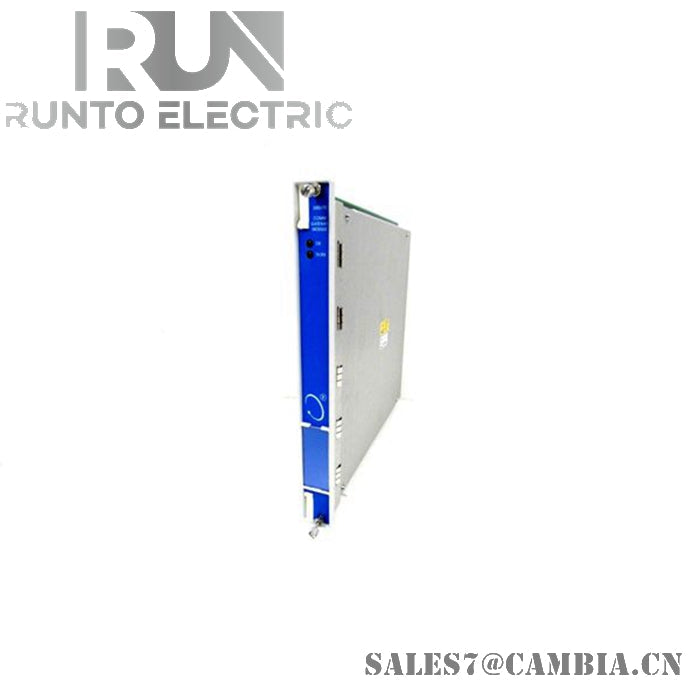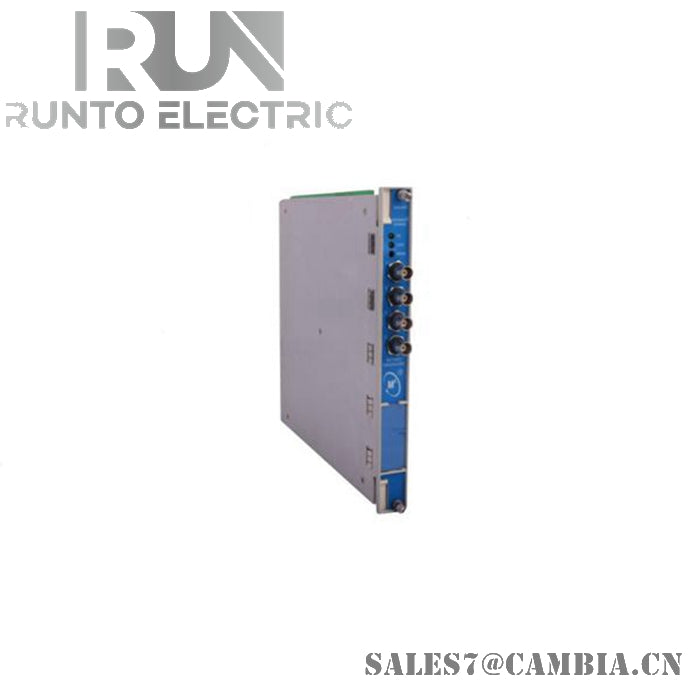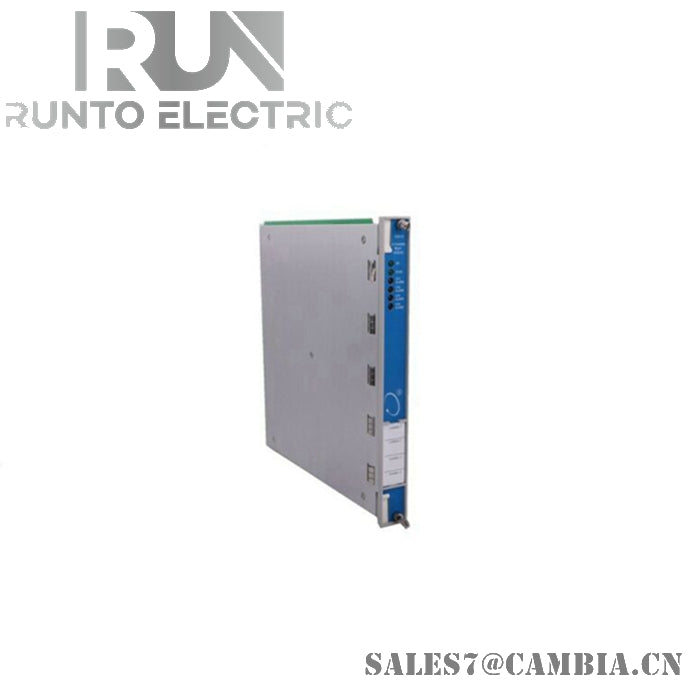
3300/50-02-01-00-00 Bently Nevada Tachometer Module

Bently Nevada 3300/50-02-01-00-00 Tachometer Monitor
The Bently Nevada 3300/50-02-01-00-00, also cataloged as the 3300/50 Tachometer Monitor, operates as a dedicated hardware component for zero-speed detection and rotational monitoring within the 3300 rack system.
Suffix Breakdown & Model Matrix
- -02 (Tachometer Type): Zero-speed tachometer option.
- -01 (Relay Option): Epoxy-sealed alert relay.
- -00 (Agency Approval): None required.
- -00 (Safety Barrier): None installed.
Hardware Specifications
| Parameter | Specification |
|---|---|
| Model | 3300/50-02-01-00-00 |
| Brand | Bently Nevada |
| Origin | USA |
| Weight | ~1.2–1.5 kg (approx. 2.65 lbs) |
| Dimensions | Standard rack slot module |
| Operating Temp | 0 to +65 deg C |
| Power Consumption | Supplied via rack backplane |
| Core Performance | Zero-speed monitoring, dual transducer inputs, proportional voltage/current outputs |
Rotor Dynamics and Cross-Talk Suppression
The tachometer monitor processes inputs from two independent transducers with internal voting logic to prevent false triggers. Buffered outputs provide raw diagnostic signals, while internal conditioning suppresses cross-talk between channels, ensuring accurate zero-speed detection and stable relay activation.
Frequently Asked Questions
Q: How does the module prevent false speed triggers? A: Internal voting logic compares signals from two transducers, rejecting inconsistent inputs.
Q: What outputs are available for integration? A: Rear terminal strips provide proportional voltage or current outputs, along with alert relay status.
Q: Can the tachometer monitor be used for shutdown automation? A: Yes, relay contacts can be wired into trip circuits for machinery shutdown at zero-speed conditions.
Field Installation Guidelines
- Install into designated rack slots with full connector engagement.
- Ensure transducer wiring is shielded and grounded at the rack end only.
- Route input cabling separately from high-voltage conductors to minimize induced noise.
- Validate transducer calibration during commissioning using reference speed signals.
- Configure relay setpoints internally before system startup.
3300/50-02-01-00-00 Bently Nevada Tachometer Module