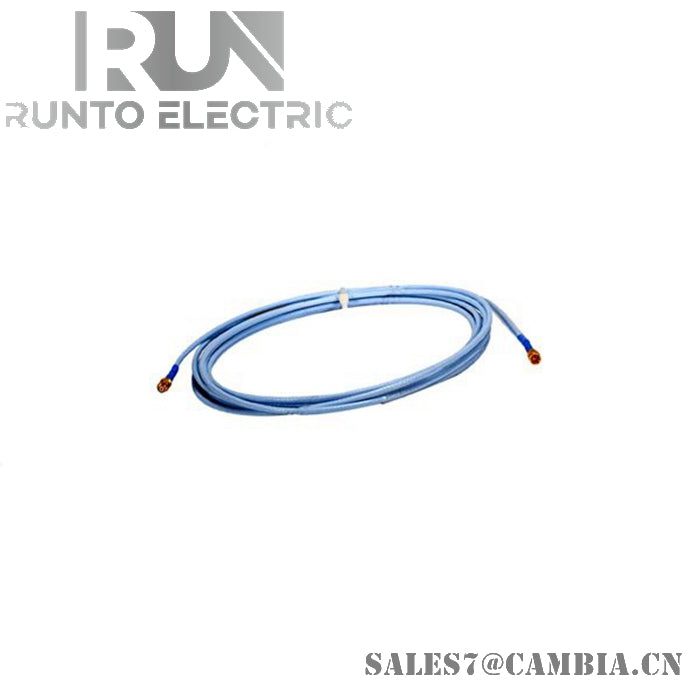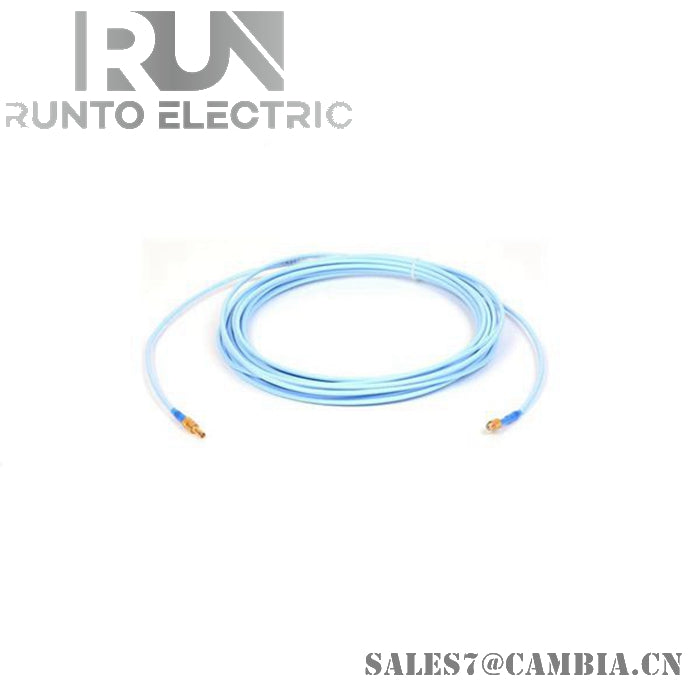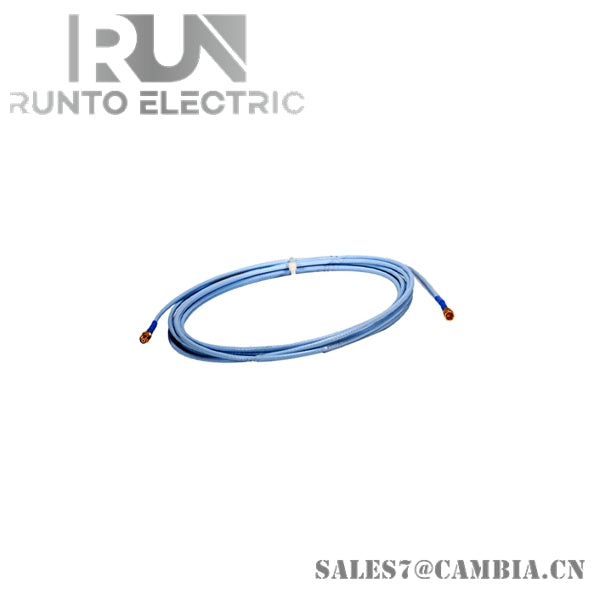
Bently Nevada 330130-080-03-05 3300 XL Extension Cable

Bently Nevada 330130-080-03-05 3300 XL Extension Cable
Configured for probe-to-sensor connectivity in the 3300 XL system, the Bently Nevada 330130-080-03-05 (330130 Extension Cable) provides direct physical transmission of eddy-current signals.
Suffix Breakdown & Model Matrix
- 080: Cable length option, 8.0 meters (26.2 feet)
- 03: Standard armored cable type with connector protector
- 05: CSA, ATEX, IECEx hazardous area approvals
Hardware Specifications
| Parameter | Specification |
|---|---|
| Model | 330130-080-03-05 |
| Brand | Bently Nevada |
| Origin | U.S.A |
| Weight | Standard armored cable mass (shipping weight varies) |
| Dimensions | 8.0 m length, armored construction |
| Operating Temp | -35 deg C to +85 deg C (typical for XL series cables) |
| Storage Temp | -51 deg C to +100 deg C |
| Power Consumption | Passive cable, no active draw |
| Function | Connects proximity probe to Proximitor sensor |
| Approvals | CSA, ATEX, IECEx |
Rotor Dynamics Signal Integrity
The extension cable maintains eddy-current probe scaling across its full length, ensuring accurate gap voltage validation at -10 VDC reference points. Cross-talk suppression is achieved through coaxial shielding and connector protector design, preserving rotor dynamics fidelity in multi-channel installations.
Frequently Asked Questions
Q: Can the 330130-080-03-05 be cut or shortened in the field? A: No, factory termination preserves impedance and calibration; modification is not permitted.
Q: Does the armored cable affect signal linearity? A: The armored design provides mechanical protection without altering electrical characteristics, maintaining full linear range.
Q: What is the recommended bend radius? A: Maintain a minimum bend radius of 25.4 mm (1 inch) to prevent coaxial geometry distortion.
Field Installation Guidelines
- Route the cable away from high-current conductors to minimize induced noise.
- Ensure connector protector engagement before energizing the system.
- Ground shielding at a single termination point to avoid ground loops.
- Avoid exceeding the specified bend radius during installation.
Bently Nevada 330130-080-03-05 3300 XL Extension Cable