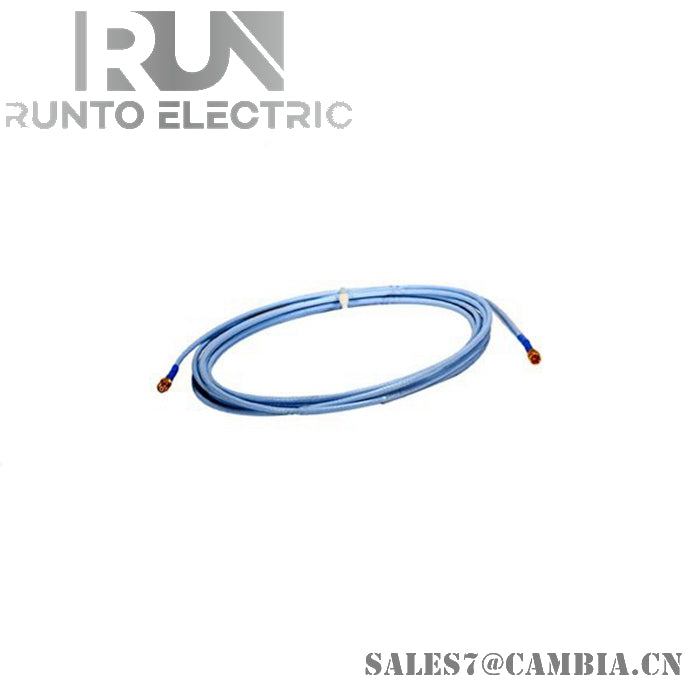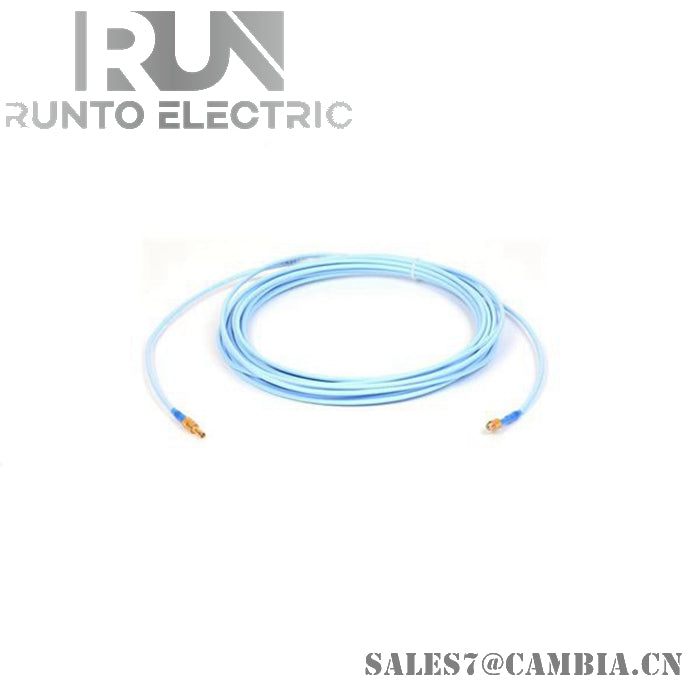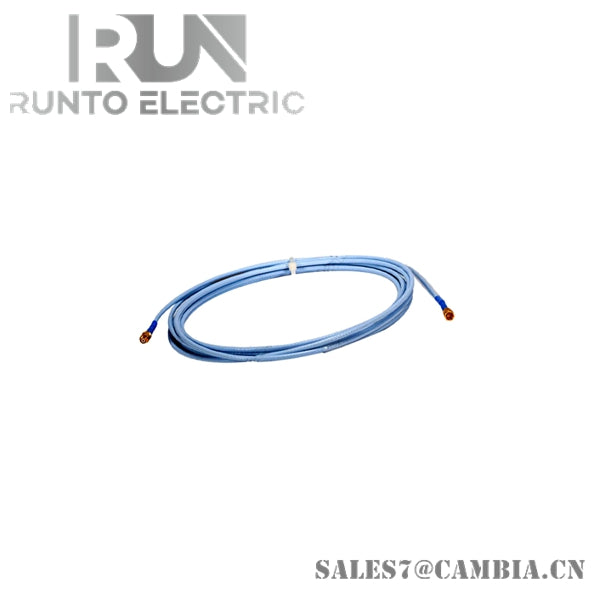
Bently Nevada 330930-060-00-00 Standard Extension Cable

Bently Nevada 330930-060-00-00 3300 XL Standard Extension Cable
Configured for signal transmission between proximity probes and Proximitor sensors in Bently Nevada transducer systems, the Bently Nevada 330930-060-00-00 (330930 3300 XL Standard Extension Cable) provides direct electrical interconnection within the 3300 XL machinery monitoring architecture. The cable forms part of a matched eddy-current transducer assembly and preserves calibrated signal characteristics between sensing and conditioning components.
Suffix Breakdown & Model Matrix
-
Cable Length Option: 060 = 6.0 m (19.7 ft)
-
Connector and Cable Option: 00 = Without stainless steel armor
-
Agency Approval Option: 00 = Not required
Hardware Specifications
| Parameter | Specification |
|---|---|
| Model | 330930-060-00-00 |
| Brand | Bently Nevada |
| Product Type | 3300 XL Standard Extension Cable |
| Origin | U.S.A. |
| Cable Length | 6.0 m (19.7 ft) |
| Armor Option | Without stainless steel armor |
| Agency Approval | Not required |
| System Compatibility | Bently Nevada 3300 XL Proximity Transducer Systems |
| Signal Type | Eddy-current transducer signal transmission |
| Connector Configuration | Factory-configured extension cable assembly |
| Application | Probe-to-Proximitor interconnection |
| Weight | 2 kg |
| Power Consumption | Passive cable assembly |
| Installation Method | Fixed field wiring and connector attachment |
Signal Integrity and Cross-Talk Suppression
The 330930 extension cable is designed for use as part of a calibrated 3300 XL transducer system consisting of a proximity probe, extension cable, and Proximitor sensor. System performance depends on maintaining the specified electrical characteristics of the complete assembly.
Extension cable length directly contributes to transducer calibration requirements. Substituting cable lengths or mixing incompatible components may alter system response and require verification against the applicable transducer configuration.
Proper cable routing reduces electromagnetic coupling between adjacent monitoring channels. Separation from high-current conductors, motor feeders, and switching circuits helps minimize cross-talk effects and preserves measurement stability in multi-channel machinery protection systems.
Frequently Asked Questions
Q: Can the extension cable be used with proximity probes from other transducer systems?
A: Compatibility depends on the calibration requirements of the complete transducer assembly. Probe, extension cable, and Proximitor components should be matched according to the applicable system configuration.
Q: Does the extension cable generate or condition measurement signals?
A: No. The extension cable is a passive component that transfers signals between the proximity probe and the associated Proximitor sensor.
Q: Can the cable length be shortened in the field?
A: Field modification of the cable assembly is generally avoided because cable characteristics form part of the calibrated transducer system.
Field Installation Guidelines
-
Verify extension cable length matches the transducer system configuration before installation.
-
Inspect cable insulation, connectors, and shielding for shipping or handling damage.
-
Route extension cables separately from power distribution wiring and motor control circuits.
-
Avoid sharp bends, crushing forces, or excessive pulling tension during installation.
-
Secure cable runs using suitable support methods to prevent vibration-induced movement.
-
Follow plant grounding and shielding practices for machinery monitoring systems.
-
Perform channel verification after installation to confirm proper transducer system operation.
Bently Nevada 330930-060-00-00 Standard Extension Cable