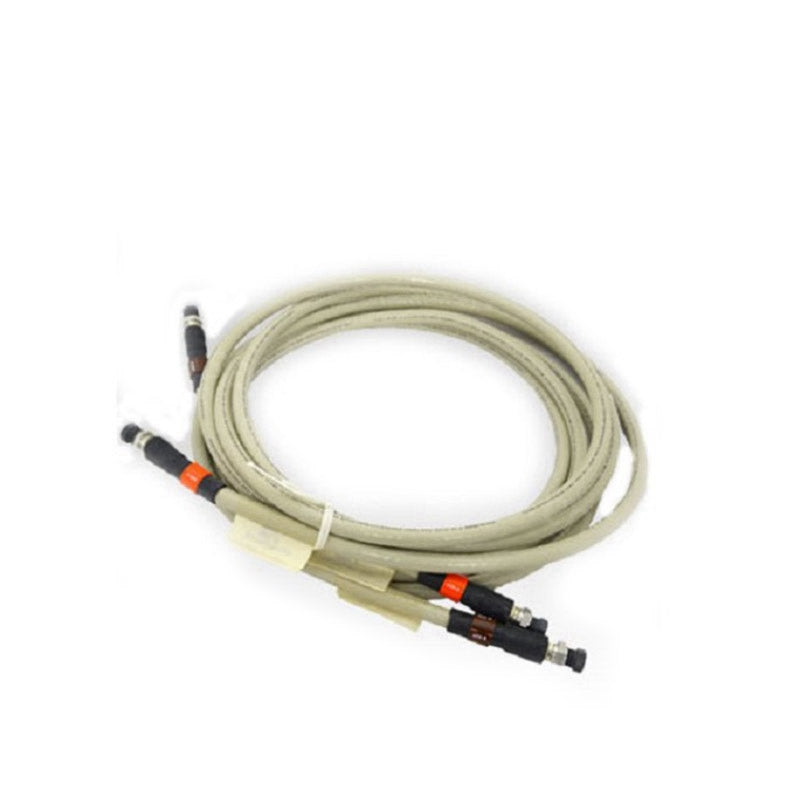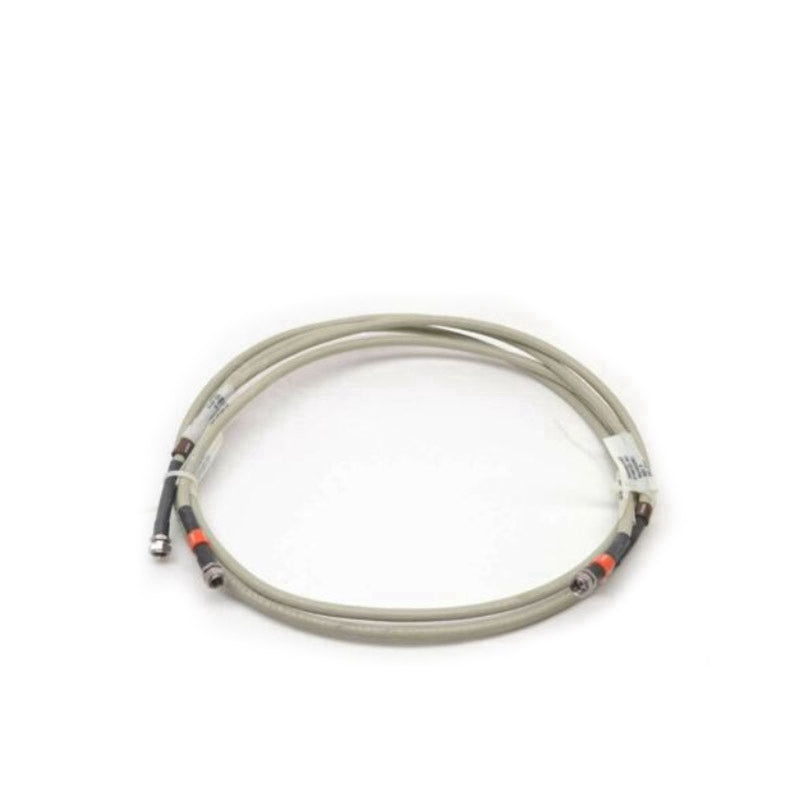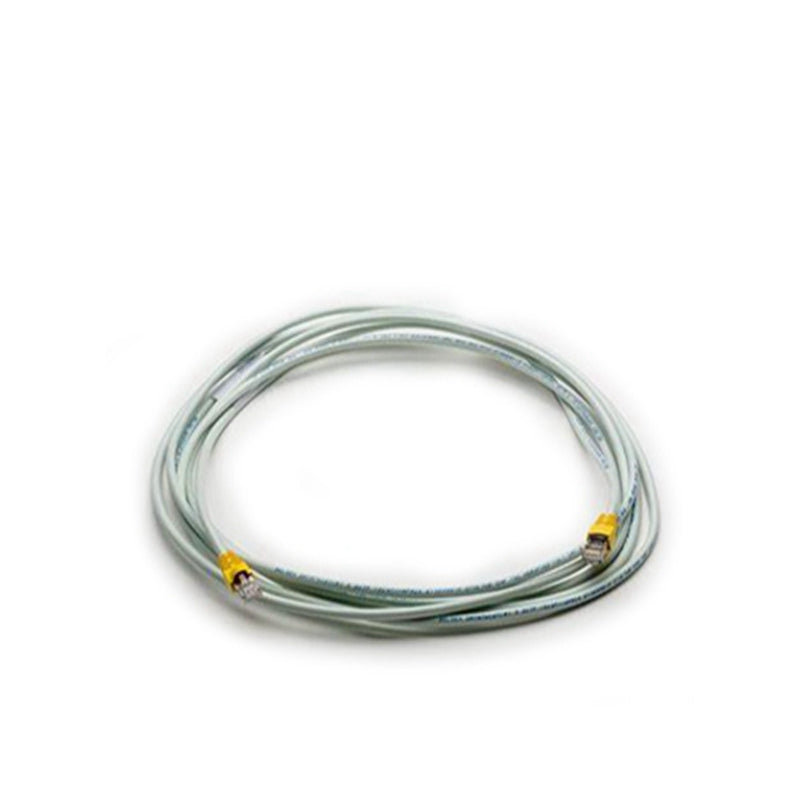
Honeywell 51199588-100 Control Cable

Honeywell 51199588-100 Control Cable
The Honeywell 51199588-100, also cataloged as the 51199588-100 control cable, serves as a shielded twisted-pair assembly for analog and digital signal transmission in industrial automation systems, supporting multi-channel connectivity with integrated DSP filtering.
Hardware Specifications
| Parameter | Specification |
|---|---|
| Model | 51199588-100 |
| Brand | Honeywell |
| Origin | USA |
| Weight | 0.2 kg (approx. 0.44 lbs) |
| Dimensions | 90 mm x 90 mm x 40 mm |
| Cable Length | 300 m (approx. 984 ft) |
| Operating Temp | -40 to +85 deg C |
| Power Consumption | Passive cable; requires 12 VDC system power |
| Core Function | Shielded twisted pair control cable |
| Jacket Material | Heavy-duty polyurethane (PU), UV-resistant, flame-retardant |
| Isolation | Shielded design for EMI/RFI suppression |
| Application | Industrial automation, process control |
Channel-to-Channel Isolation
The cable employs a shielded twisted pair architecture to maintain isolation between analog and digital signals. Supported signal types include 4–20 mA current loops, 0–10 VDC, and ±10 VDC voltage loops, with DSP-based filtering to suppress environmental noise. This ensures precision measurement at ±0.1% of full scale across 4 to 8 configurable channels. RS-485 communication support enables long-distance deterministic networking.
Frequently Asked Questions
Q: Can the 51199588-100 cable be used for mixed analog and digital signals simultaneously? A: Yes, the shielded twisted pair design supports both analog current/voltage loops and RS-485 digital communication within defined channel groups.
Q: What is the recommended installation environment for this cable? A: It is suitable for harsh industrial environments, with polyurethane jacketing providing UV resistance, flame retardancy, and chemical durability.
Q: Does the cable require external calibration? A: No, accuracy is maintained through DSP filtering and shielding; calibration is managed at the connected module level.
Field Installation Guidelines
- Route the cable in dedicated trays or conduits to minimize mechanical stress.
- Maintain shield grounding at a single point to prevent ground loops.
- Avoid parallel routing with high-voltage lines to reduce induced noise.
- Observe minimum bend radius to prevent conductor fatigue.
- Verify terminal block connections are secure before energizing the system.
- Inspect polyurethane jacket integrity to ensure environmental protection.
Honeywell 51199588-100 Control Cable