Honeywell 51201397-915 Power Distribution Cable

Honeywell 51201397-915 Power Distribution Cable
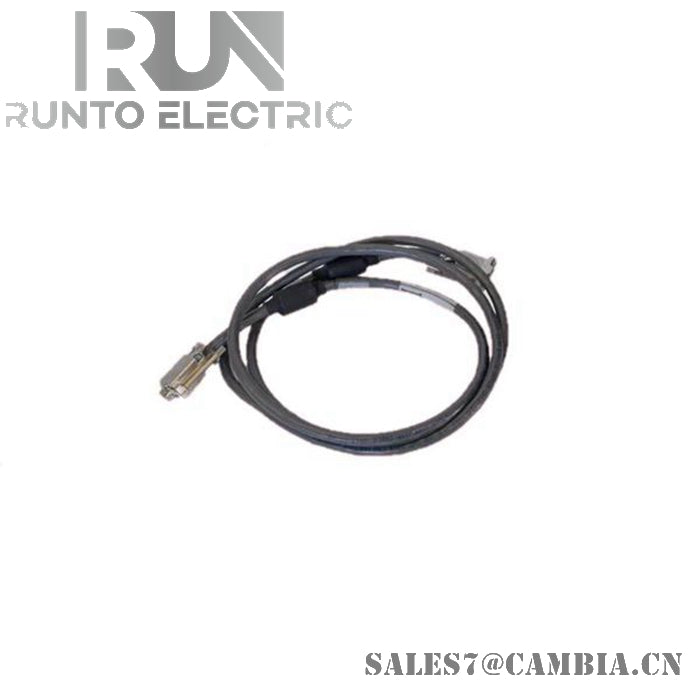
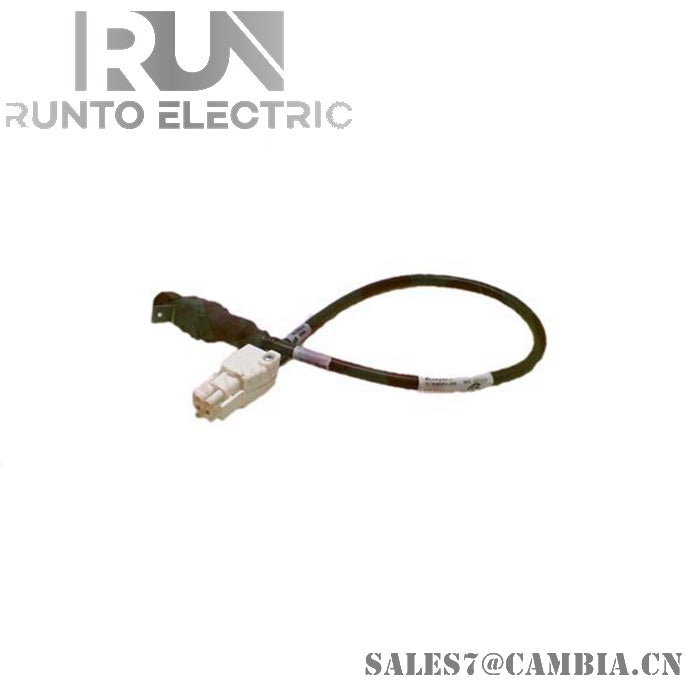
The Honeywell 51201397-915, also cataloged as the 51201397-915 power distribution cable, serves as a shielded copper conductor assembly for regulated power transfer between Honeywell control modules in distributed automation systems.
Hardware Specifications
| Parameter | Specification |
|---|---|
| Model | 51201397-915 |
| Brand | Honeywell |
| Origin | USA |
| Weight | 0.22 kg (approx. 0.49 lbs) |
| Dimensions | Length 1.5 m (4.92 ft) |
| Operating Temp | -40 to +85 deg C |
| Power Consumption | 0 W (passive cable assembly) |
| Core Function | Power distribution cable for Honeywell modules |
| Connector Type | Factory custom industrial male-to-male connectors |
| Conductor Material | High-conductivity copper with insulated jacket |
| Shielding | Braided copper shield for EMI/RFI suppression |
| Application | Honeywell control system power interconnection |
Channel-to-Channel Isolation
The cable employs a braided copper shielding structure to suppress EMI and RFI across connected modules. This shielding ensures stable power distribution without cross-talk between adjacent circuits. Polyurethane insulation enhances mechanical durability and chemical resistance, supporting continuous-duty operation in harsh industrial environments.
Frequently Asked Questions
Q: Can the 51201397-915 cable be hot-swapped during operation? A: No, power cables must be disconnected only when the system is powered down to avoid electrical hazards.
Q: Does the cable provide galvanic isolation? A: No, galvanic isolation is achieved at the module level; the cable provides shielding and physical separation only.
Q: Is the cable interchangeable with other Honeywell power cables? A: Use only the specified part number; connector design and shielding are tuned for Honeywell system compatibility.
Field Installation Guidelines
- Verify connector alignment before insertion to prevent pin damage.
- Route the cable in dedicated trays or conduits to minimize mechanical stress.
- Maintain shield grounding at a single point to prevent ground loops.
- Avoid parallel routing with high-voltage lines to reduce induced noise.
- Inspect insulation and shielding integrity before energizing the system.
Honeywell 51201397-915 Power Distribution Cable