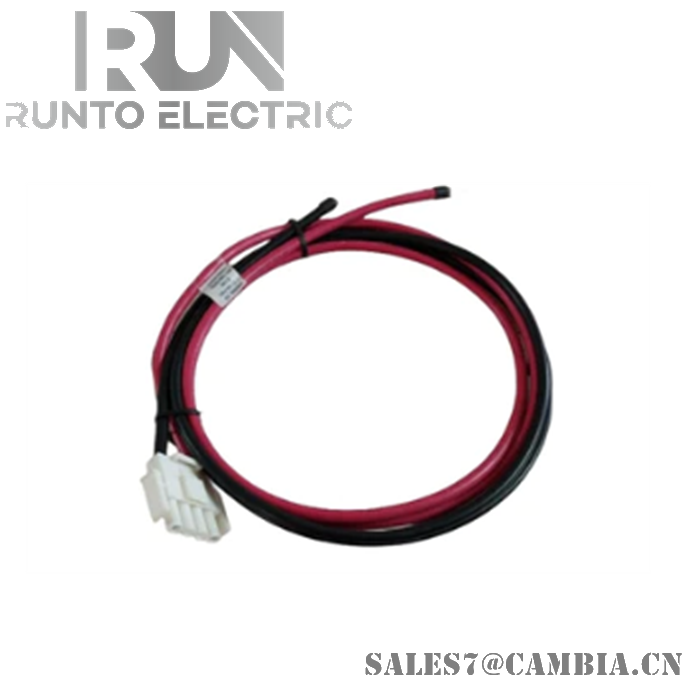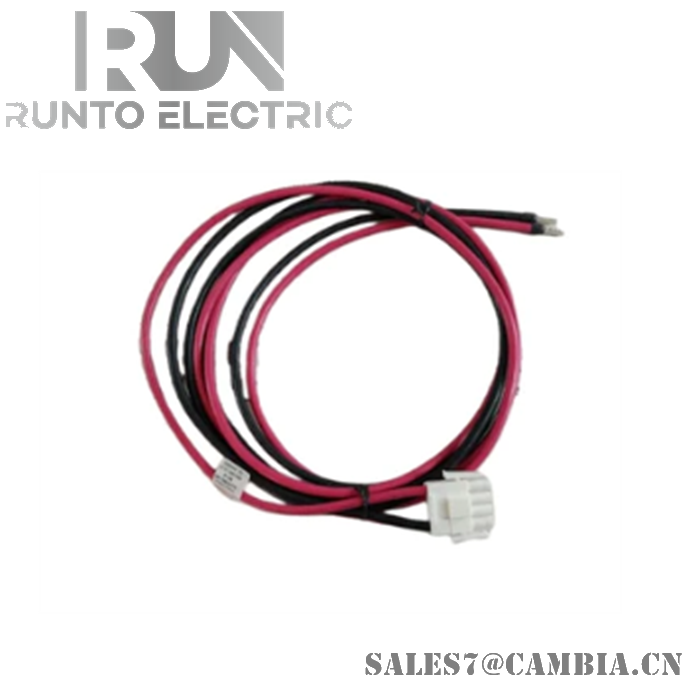
Honeywell 51202991-010 Spare Point I/O Cable

Honeywell 51202991-010 Spare Point I/O Cable
The Honeywell 51202991-010, also cataloged as the 51202991-010 spare point I/O cable, serves as a shielded UHIO multi-core assembly for stable low-voltage signal transmission between C300 controllers, field termination assemblies, and distributed I/O devices.
Hardware Specifications
| Parameter | Specification |
|---|---|
| Model | 51202991-010 |
| Brand | Honeywell |
| Origin | USA |
| Weight | Not specified |
| Dimensions | Cable length 10 m (suffix -010) |
| Operating Temp | -10 to +55 deg C |
| Storage Temp | -40 to +85 deg C |
| Power Consumption | Passive cable assembly |
| Core Function | Spare point I/O cable for UHIO systems |
| Jacket Material | PVC or LSZH, flame-retardant, oil/moisture resistant |
| Isolation | Shielded design, ≥100 MΩ insulation resistance |
| Application | Experion PKS C300 cabinet interconnection |
| Protection Rating | IP20 (connectors and terminations) |
Channel-to-Channel Isolation
The cable employs multi-core shielding to suppress EMI and RFI across grouped I/O signals. Low contact resistance connectors ensure minimal signal attenuation, while insulation resistance ≥100 MΩ maintains electrical separation. Compact connector design supports quick insertion or screw-type fastening, ensuring reliable integration into Honeywell UHIO systems.
Frequently Asked Questions
Q: Can the 51202991-010 cable be extended beyond 10 m? A: The -010 suffix specifies 10 m length; longer lengths are available under different suffix codes (e.g., 300 m reels). Extension should follow Honeywell-approved assemblies.
Q: Does the cable support hot-swap of I/O modules? A: Hot-swap capability depends on the connected module; the cable itself provides passive interconnection only.
Q: What environmental limits apply to cabinet installation? A: The cable is rated for -10 to +55 deg C operation inside C300 cabinets, with humidity tolerance up to 95% non-condensing.
Field Installation Guidelines
- Route the cable in designated trays or conduits to minimize mechanical stress.
- Maintain shield grounding at a single point to prevent ground loops.
- Avoid parallel routing with high-voltage lines to reduce induced noise.
- Verify connector seating and secure fastening before energizing the system.
- Inspect jacket integrity to ensure flame-retardant and moisture-resistant performance.
Honeywell 51202991-010 Spare Point I/O Cable