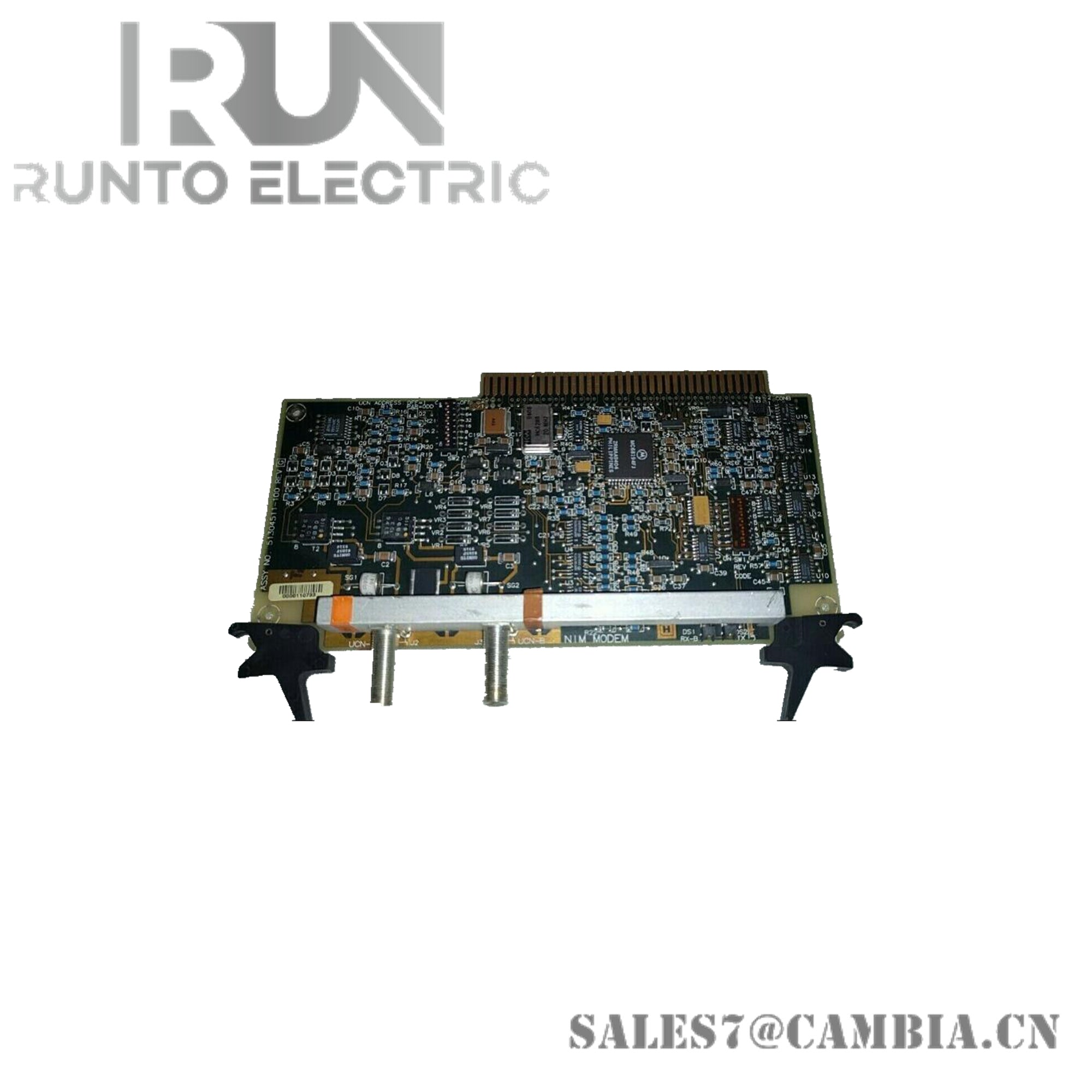
Honeywell 51304537-100 PWB CNI Input Output Board

Honeywell 51304537-100 PWB CNI Input Output Board
Configured for control‑network signal conditioning and routing in the Honeywell TDC 3000 architecture, the Honeywell 51304537‑100 (51304537‑100 PWB CNI board) provides direct physical execution of serial‑layer communication across DB25 and DB9 interfaces.
Hardware Specifications
| Parameter | Specification |
|---|---|
| Model | 51304537‑100 |
| Brand | Honeywell |
| Origin | Honeywell TDC 3000 DCS |
| Weight | ~0.40 lbs (160–180 g) |
| Dimensions | PCB form factor with DB25 + dual DB9 connectors |
| Operating Temp | –40 deg C to +70 deg C |
| Power Consumption | 3.5 W typical |
| Storage Temp | –40 deg C to +85 deg C |
| Humidity | 5% to 95% RH, non‑condensing |
| Connectors | 1 × DB25, 2 × DB9 |
| Function | Control‑network signal conditioning and routing |
Channel‑to‑Channel Isolation Behavior in Honeywell DCS
Within the TDC 3000 network layer, the board maintains deterministic separation between serial channels. This prevents unintended cross‑talk between DB25 and DB9 paths and stabilizes communication timing across the CNI subsystem. The isolation behavior aligns with Honeywell’s broader process‑control design practices, where predictable signal boundaries are required for 4‑20 mA HART loop protocol devices and network‑layer modules.
Frequently Asked Questions
Q: Does the board support hot‑swap during system operation? A: No. Removal or insertion must be performed during a controlled shutdown to avoid network‑layer communication faults.
Q: Are the DB25 and DB9 ports electrically isolated from each other? A: The board maintains separation at the routing and conditioning level, but isolation strategy depends on the upstream CNI subsystem design rather than the board alone.
Q: Can this board operate in high‑humidity industrial cabinets? A: Yes, within the specified 5% to 95% RH non‑condensing range.
Field Installation Guidelines
- Seat the board fully into the TDC 3000 card‑file backplane to ensure stable signal routing.
- Provide strain relief for DB25 and DB9 connectors to prevent mechanical stress on solder joints.
- Maintain cabinet airflow; the board relies on passive cooling.
- Avoid condensation; follow humidity limits strictly.
- Verify serial communication paths after installation using CNI diagnostic tools.
Honeywell 51304537-100 PWB CNI Input Output Board