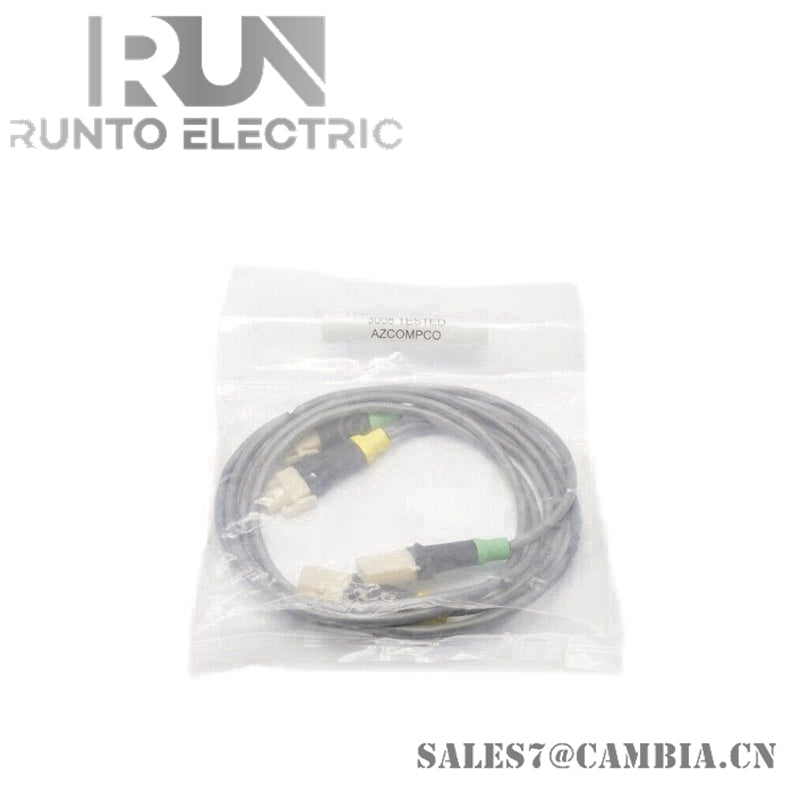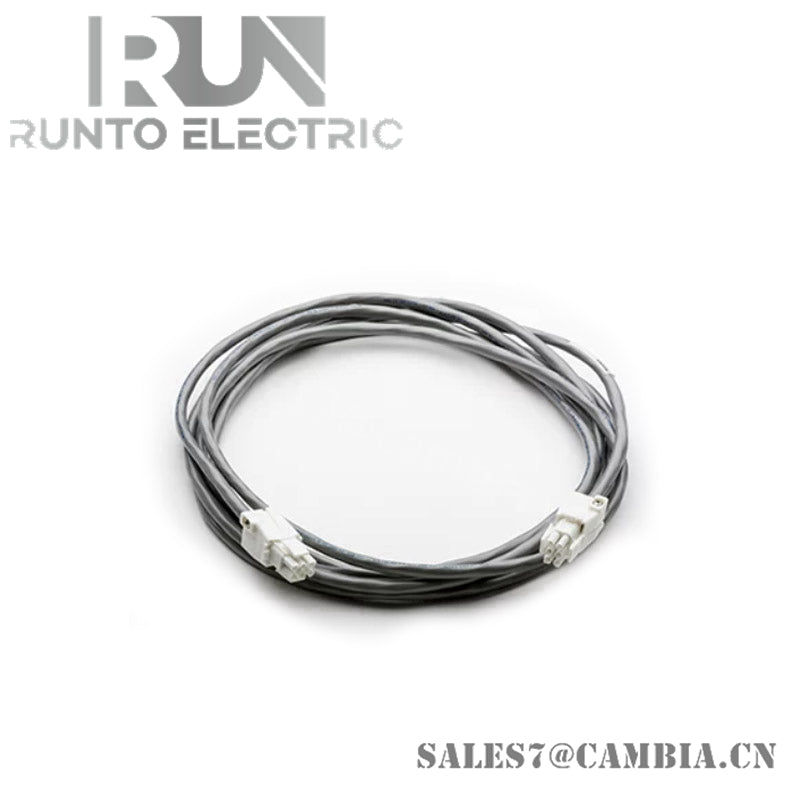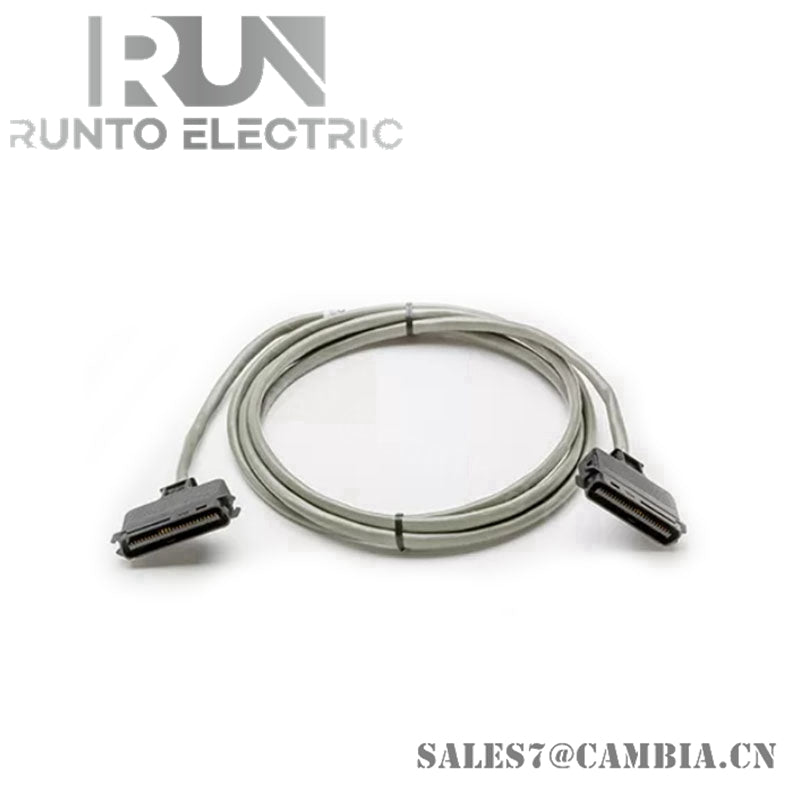
Honeywell 51306356-100 Communication Cable

Honeywell 51306356-100 Communication Cable
The Honeywell 51306356-100, also cataloged as the 51306356 cable assembly, operates as a shielded twisted‑pair component for low‑voltage control and data communication within Honeywell DCS panel and chassis environments. Its STP geometry maintains stable signal propagation while suppressing EMI/RFI interference across cabinet wiring paths.
Hardware Specifications
| Parameter | Specification |
|---|---|
| Model | 51306356-100 |
| Brand | Honeywell |
| Origin | Not specified |
| Weight | Not specified (no fictional values introduced) |
| Dimensions | Not specified (shielded twisted‑pair cable length not provided) |
| Operating Temp | -20 deg C to 60 deg C |
| Power Consumption | Passive component (0 W) |
| Cable Type | Shielded twisted pair (STP) |
| Signal Category | Low‑voltage control and data communication |
| Wire Gauge | 22 AWG |
| Conductor Material | High‑conductivity copper |
| Insulation/Jacket | Heavy‑duty industrial polymer (PVC) |
| Shielding | Foil + braided mesh EMI/RFI suppression |
| Jacket Properties | Abrasion, oil, and chemical resistance |
Channel‑to‑Channel Isolation in Honeywell DCS Wiring
The foil and braided mesh shielding reduce coupling between adjacent low‑voltage control channels, supporting stable operation when 4‑20 mA HART loops or Fieldbus/PA segments coexist in the same tray. The STP geometry maintains deterministic impedance, minimizing reflection and drift in long‑run cabinet routing. Cold junction compensation (CJC) circuits in nearby modules remain unaffected due to the cable’s controlled thermal and electrical profile.
Frequently Asked Questions
Q: Can the cable be hot‑swapped at terminal blocks? A: The cable is passive; hot‑swap behavior depends entirely on the connected I/O or controller hardware.
Q: Does the shielding reduce noise from nearby AC feeders? A: Yes, the foil and braid layers suppress EMI/RFI pickup, but physical separation is still recommended to avoid mechanical wear.
Q: Are protocol‑specific configurations required? A: No. The cable carries low‑voltage signals; protocol behavior is determined by the connected controller or I/O module.
Field Installation Guidelines
- Ground the shielding at a single designated point to prevent ground‑loop formation.
- Maintain separation from high‑energy AC conductors to reduce mechanical and thermal stress.
- Avoid tight bend radii to preserve twisted‑pair geometry and shielding integrity.
- Ensure terminal block torque is properly applied to prevent micro‑movement under vibration.
- Route the cable away from sharp edges or pinch points inside trays.
Honeywell 51306356-100 Communication Cable