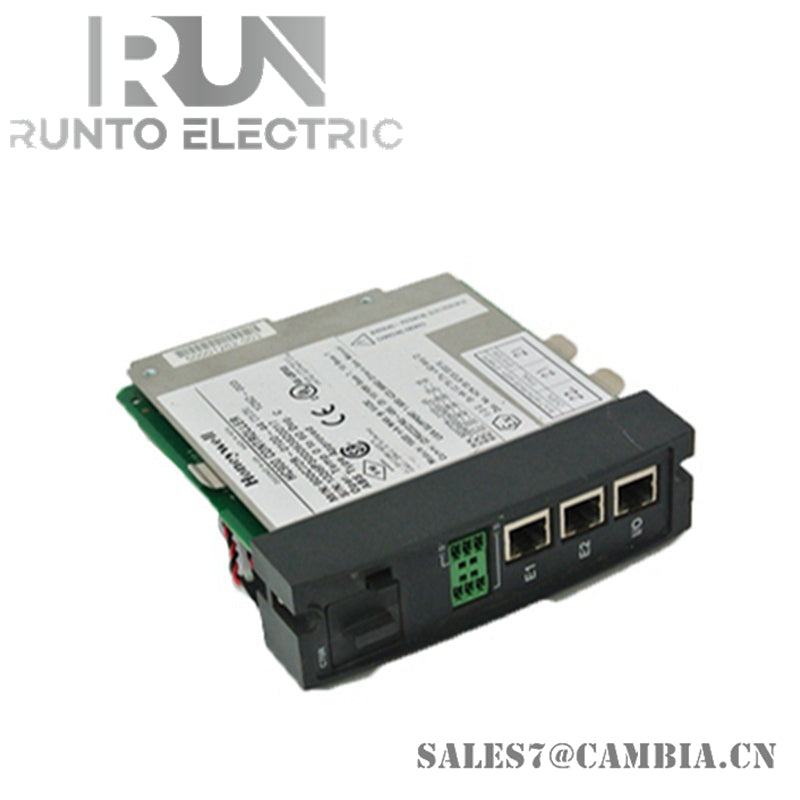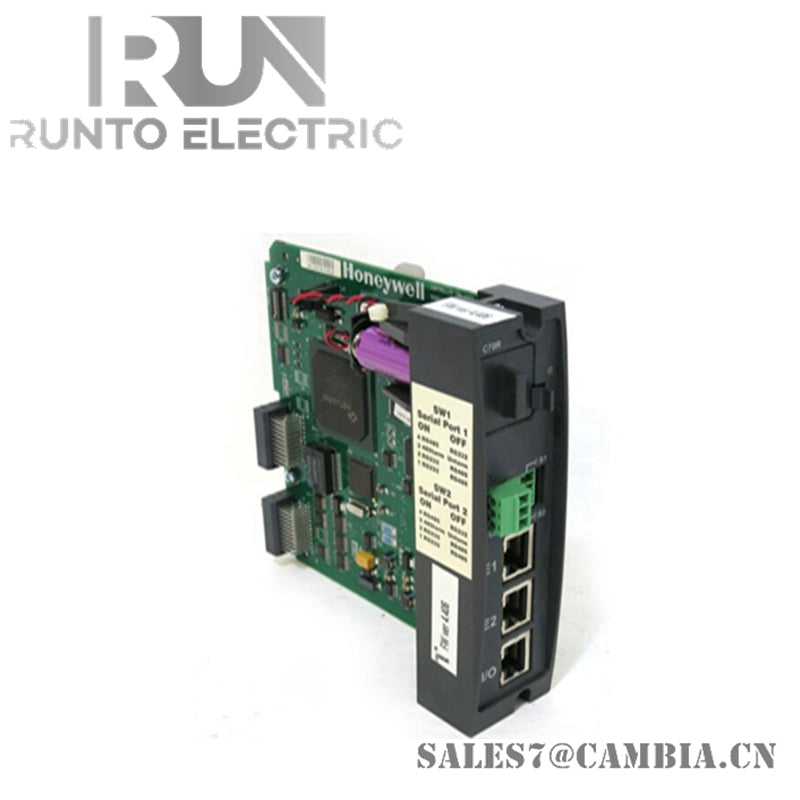
Honeywell 900C73R-0100-44 Redundant I/O Scanner Module

Honeywell 900C73R-0100-44 Redundant I/O Scanner Module
The Honeywell 900C73R-0100-44, also cataloged as the 900C73R redundant I/O scanner module, operates as a dedicated hardware component for dual-port Ethernet scanning and remote rack communication within ControlEdge HC900 systems.
Hardware Specifications
| Parameter | Specification |
|---|---|
| Model | 900C73R-0100-44 |
| Brand | Honeywell |
| Origin | ControlEdge HC900 Series |
| Weight | 0.70–0.71 lbs (0.32 kg) |
| Dimensions | Not specified |
| Operating Temp | 0 to 60 deg C (32 to 140 Fahrenheit) |
| Power Consumption | 5 VDC, max rack supplied |
| Device Type | Redundant I/O Scanner Module |
| Communication Ports | 2 dual-redundant communication ports |
| Path Backup | Dual-port redundancy for link failure |
| Hot-Swap Design | Supports module replacement without shutdown |
| Remote Racks | Connects CPU to distributed I/O racks |
Channel-to-Channel Isolation
Within HC900 architectures, the redundant I/O scanner maintains channel-to-channel isolation across dual communication ports. This prevents cross-talk between redundant paths and ensures deterministic update cycles. The isolation design stabilizes communication timing during redundancy transitions, maintaining predictable behavior across remote rack connections.
Frequently Asked Questions
Q: Can the 900C73R-0100-44 be hot-swapped during operation? A: Yes, the module supports hot-swap replacement without requiring system shutdown.
Q: How does redundancy behave if one communication port fails? A: The scanner automatically switches to the secondary port, maintaining continuous communication with minimal delay.
Q: Does the module require firmware updates for compatibility? A: Firmware alignment with HC900 system revisions is recommended to ensure proper redundancy handling and communication integrity.
Field Installation Guidelines
- Insert the module vertically into the HC900 rack backplane until fully seated.
- Route redundant communication cabling separately to reduce electromagnetic coupling.
- Bond shielded cable grounds at a single termination point to prevent circulating currents.
- Verify LED indicators for port activity and redundancy state before enabling operations.
- Maintain enclosure airflow to avoid thermal buildup around the module.
Honeywell 900C73R-0100-44 Redundant I/O Scanner Module