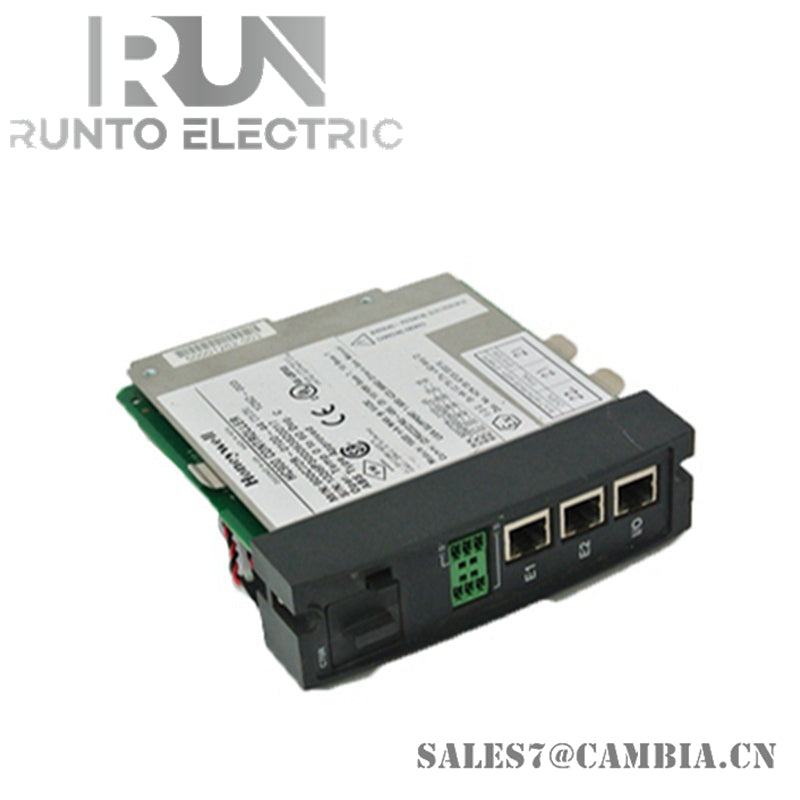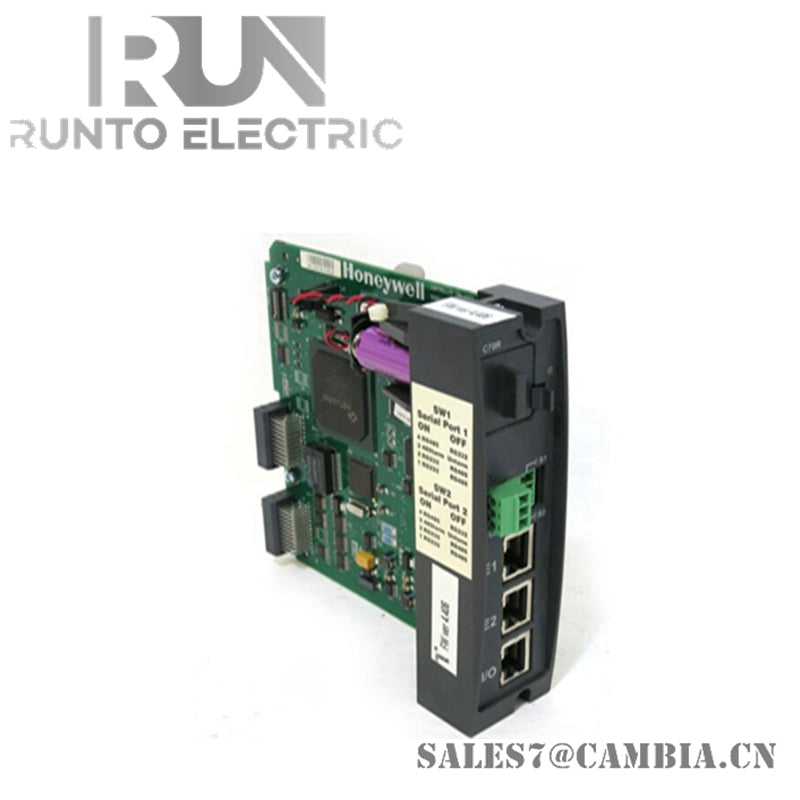
Honeywell 900S75S-0460 Dual-Port I/O Scanner Module

Honeywell 900S75S-0460 Dual-Port I/O Scanner Module
The Honeywell 900S75S-0460, also cataloged as the 900S75S dual‑port I/O scanner, serves as a dedicated hardware component for Ethernet‑based remote I/O integration within ControlEdge HC900 systems.
Hardware Specifications
| Parameter | Specification |
|---|---|
| Model | 900S75S-0460 |
| Brand | Honeywell |
| Origin | USA |
| Series | ControlEdge HC900 |
| Device Type | Dual‑port I/O Scanner |
| Port Count | 2 ports |
| Communication | Ethernet, Modbus protocol support |
| Application | Industrial process control, manufacturing plants, remote data monitoring |
| Indicators | Front‑panel LEDs for scanner status and port activity |
| Mounting | Standard HC900 rack slot |
| Power Supply | 5 VDC (rack powered) |
FOUNDATION Fieldbus / Profibus PA Connectivity
The 900S75S‑0460 supports deterministic Ethernet communication for HC900 distributed control systems. FOUNDATION Fieldbus and Profibus PA connectivity options allow integration with process instrumentation. Channel‑to‑channel isolation principles are applied to prevent interference between dual ports, ensuring stable data exchange in redundant or high‑availability configurations. Cold junction compensation (CJC) techniques are applied in mixed analog/digital environments to stabilize thermal readings.
Frequently Asked Questions
Q: What is the primary function of the 900S75S‑0460? A: It scans and exchanges data between remote I/O racks and the HC900 controller using dual Ethernet ports.
Q: Can the module be hot‑swapped? A: No, the module requires de‑energization before insertion or removal to avoid undefined states.
Q: How are communication errors indicated? A: Front‑panel LEDs display scanner mode, error states, and RX/TX activity for each port.
Field Installation Guidelines
- Mount the module in the designated HC900 rack slot with secure fasteners.
- Route Ethernet cabling separately from power wiring to minimize EMI.
- Verify grounding of shield connections to maintain communication integrity.
- Observe LED indicators during commissioning to confirm proper operation.
- Maintain clearance for airflow around the rack to prevent thermal buildup.
Honeywell 900S75S-0460 Dual-Port I/O Scanner Module