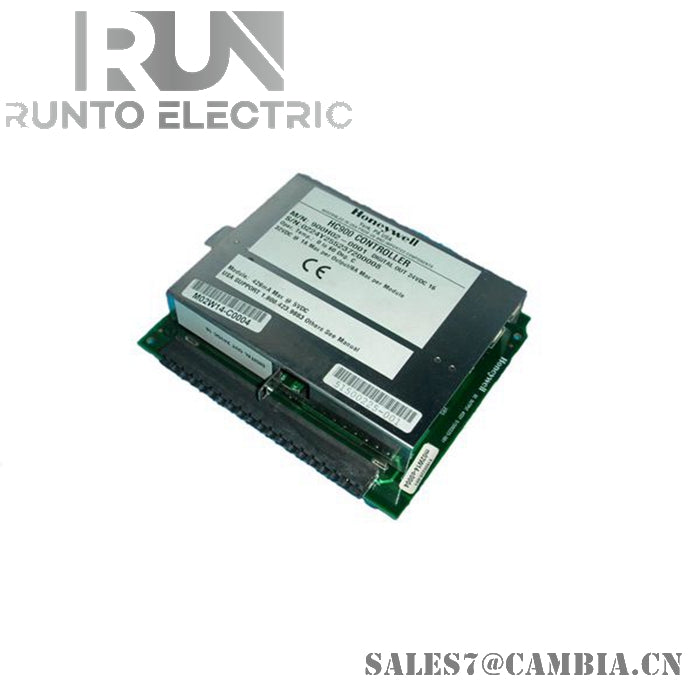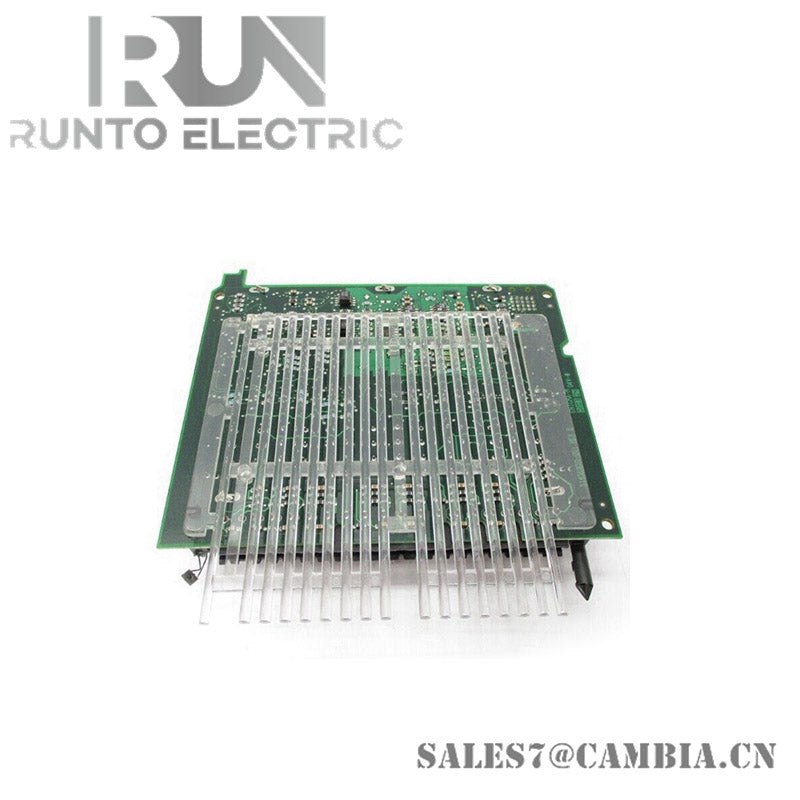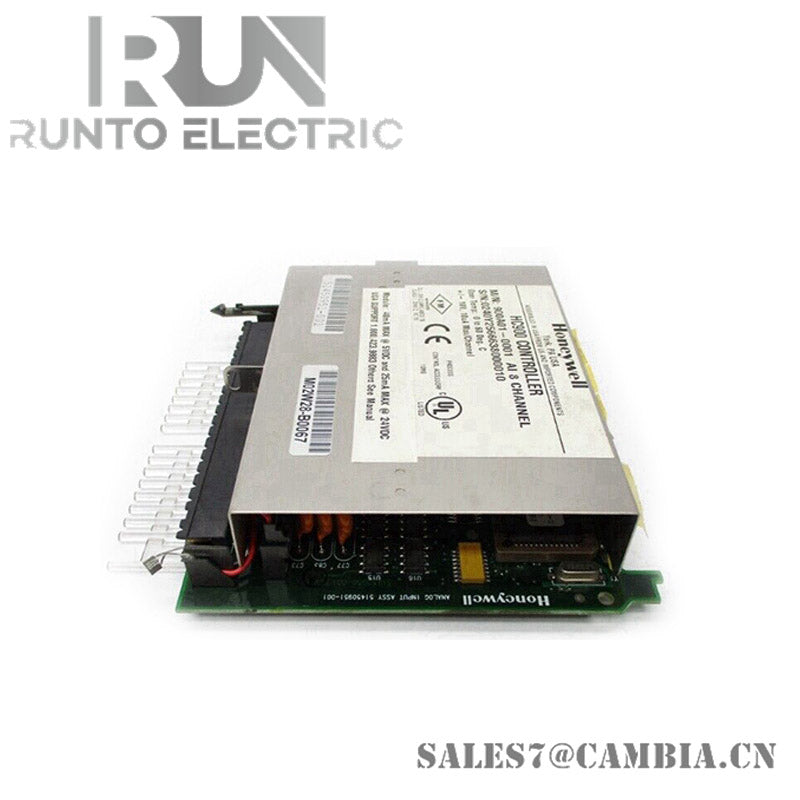
Honeywell 900TEK-0101 Low Voltage Terminal Block

Honeywell 900TEK-0101 Low Voltage Terminal Block
The Honeywell 900TEK-0101, also cataloged as the UMCELFT102 low‑voltage terminal block, operates as a dedicated hardware component for screw‑clamp field‑signal termination within the ControlEdge HC900 system’s low‑voltage I/O circuits.
Hardware Specifications
| Parameter | Specification |
|---|---|
| Model | 900TEK-0101 |
| Brand | Honeywell |
| Origin | Not specified |
| Weight | 110 g |
| Dimensions | Not specified |
| Operating Temp | –40 deg C to +70 deg C |
| Power Consumption | Passive terminal block |
| Voltage Rating | 30 VDC maximum |
| Current Rating | 15 A / 16 A at 300 V max (per safety standards) |
| Wire Range | AWG #14 to #26 (solid/stranded), AWG #12 (stranded only) |
| Terminal Torque | 7 lb‑in |
| Terminal Type | Removable Euro‑style screw‑clamp |
| Number of Positions | 36 positions |
| Housing Material | Flame‑retardant industrial thermoplastic |
| System Compatibility | ControlEdge HC900 low‑voltage I/O modules |
| Color Identification | Black (low‑voltage designation) |
| MFG P/N | UMCELFT102 / UMCELFT002 |
4-20 mA HART Loop Protocol & Channel Isolation
When paired with HC900 analog and digital modules, the terminal block maintains stable 4-20 mA HART loop routing by providing consistent screw‑clamp compression and channel‑to‑channel isolation. The Euro‑style geometry reduces conductive coupling between adjacent terminations, limiting noise propagation from high‑density wiring bundles. This isolation behavior is critical for HC900 analog input modules where loop integrity and cold‑junction compensation parameters rely on predictable low‑voltage termination paths.
Frequently Asked Questions
Q: Can the terminal block be removed while the module is powered? A: Removal is mechanically possible, but low‑voltage I/O channels will drop out immediately. Hot‑swap is not recommended unless the controller is in a safe state.
Q: Does the terminal block affect backplane current consumption? A: No. It is a passive mechanical termination device and does not draw current from the HC900 backplane.
Q: Are there restrictions on stranded wire insertion? A: Stranded AWG #12 is supported, but ferrules should be used to prevent frayed conductor spread during torque application.
Field Installation Guidelines
Route low‑voltage wiring separately from high‑voltage conductors to minimize induced noise. Maintain uniform torque across all screw‑clamp positions to ensure stable compression. Use proper stripping lengths to avoid exposed copper beyond the clamp zone. Ground shields at a single point to prevent circulating currents. Verify each channel’s continuity after installation using a loop tester before commissioning the HC900 module.
Honeywell 900TEK-0101 Low Voltage Terminal Block